I suddenly felt the urge to travel, so I hurriedly bought a train ticket and booked a hotel. The destination I chose was Nagoya. On the morning of the trip, I had to visit a financial institution, and in the afternoon I had a hair salon appointment, which meant I departed afterward—making this a trip with a very tight schedule.
If you book the Shinkansen using the Smart EX mobile app, you can pay with the electronic payment set up on your Apple Watch. Just tap your Apple Watch on the ticket gate and you’re good to go.


I chose a Green Car seat, bought a boxed meal and tea at the station kiosk, and had dinner on the train. I also ordered some snacks and coffee through the onboard mobile ordering service. By the time I arrived in Nagoya, it was already completely dark.
Night Views from Sky Promenade

Located on the top floor of Midland Square, a building right next to Nagoya Station, is the Sky Promenade. Since it’s an open-air observation deck with no roof where you can enjoy the scenery while feeling the wind, I decided to check it out. As someone who loves night views, it was a place I had really wanted to visit.
From the 46th floor, you get a full 360-degree view. Even at night, the lighting is designed so it doesn’t reflect off the glass, making it easy to enjoy the cityscape without glare. The venue is open until late, which makes it an excellent spot for night views.
That said, since I visited in December—and at such a high elevation—the wind was incredibly strong and cold. It was freezing.
Walking Through the City at Night


After enjoying the night view from above, I decided to walk through the city at night. I checked Google Maps and thought I might be able to walk to Nagoya Castle, but it turned out to be quite far and pretty exhausting. Since Nagoya Castle is closed at night, I admired it from a distance and then moved on.
Next, I enjoyed the exterior illumination of the Chubu Electric Power MIRAI TOWER. If I had arrived a bit earlier, I could have gone inside, but I was too late and it had already closed.
Nagoya Castle


The next morning, I headed to Nagoya Castle. I took the subway from Nagoya Station and got off at Nagoya Castle Station. Exiting the station, I arrived at the Muneharu Zone of Kinshachi Yokocho. Walking on from there, I reached the East Gate and made my way toward the main keep.
There were quite a lot of people, but once inside, I saw preparations underway for a local idol live performance. I was glad I had arrived early.
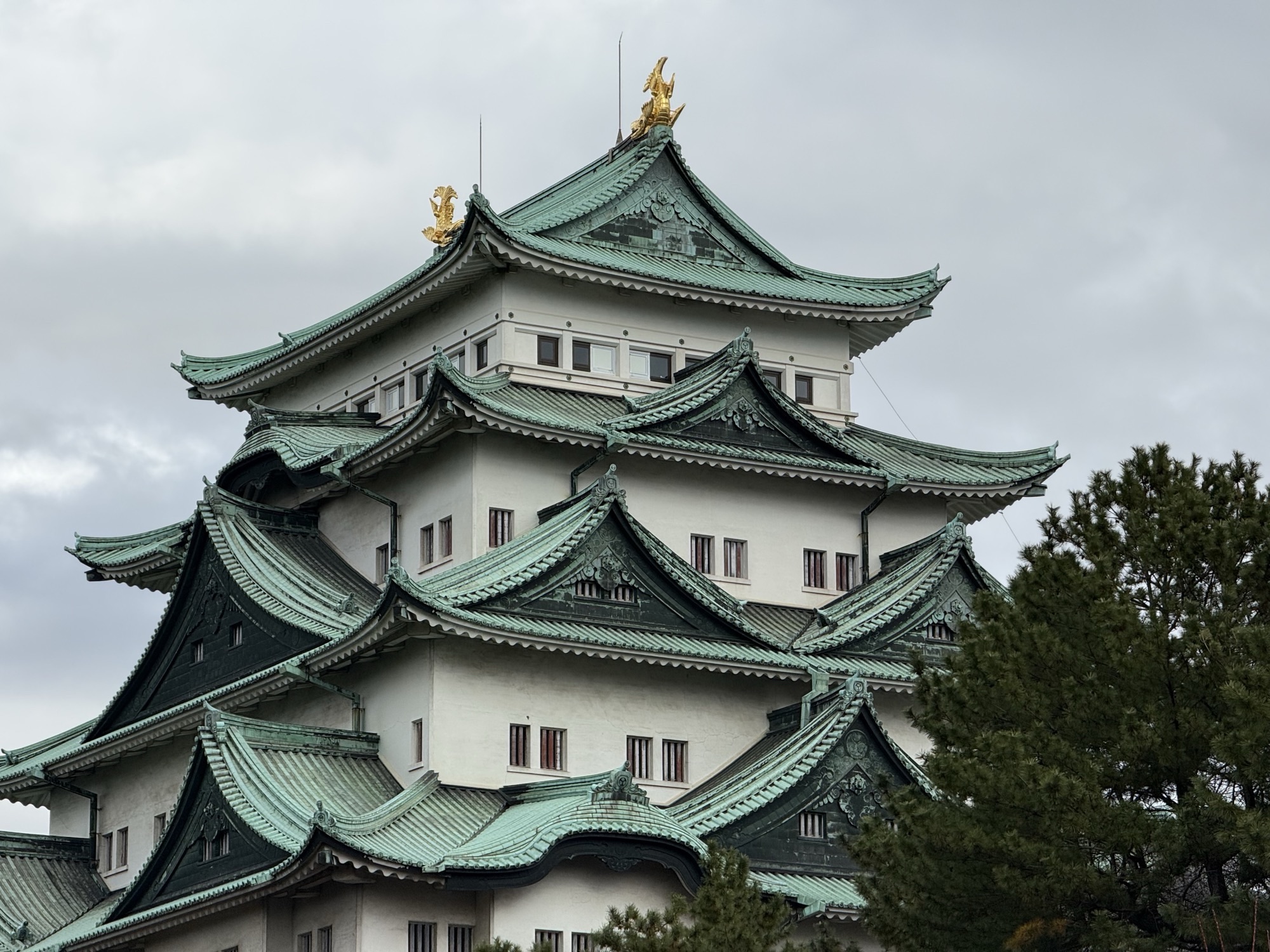
The main keep itself has been closed since May 2018 due to insufficient earthquake resistance. After viewing the keep from the outside and admiring the stone walls, I left the castle grounds.
Enjoying Hitsumabushi for Lunch

For lunch, I decided to have hitsumabushi at a restaurant called Hitsumabushi Nagoya Bincho. Nagoya is famous for the golden shachihoko of Nagoya Castle, and the menu included hitsumabushi topped with gold leaf, so I ordered that. The staff were incredibly polite and attentive.
Chubu Electric Power MIRAI TOWER

After lunch, I headed to the Chubu Electric Power MIRAI TOWER. After buying a ticket, I enjoyed views of Nagoya from the observation deck. Originally built as a television tower, this structure is Japan’s first centralized radio wave tower, designed by Dr. Tachu Naito of Waseda University. He also designed the Sapporo TV Tower and Tokyo Tower.
After the end of analog broadcasting, the tower transitioned from a broadcasting facility to a sightseeing attraction. It is also the first tower in Japan to be designated an Important Cultural Property.
Nagoya Port


After leaving the tower, I headed to the sea. I took the Meiko Line to Nagoya Port and visited the Nagoya Port Building and the Antarctic research vessel Fuji. When you exit Nagoya Port Station and walk toward the waterfront, the first thing you see is the Nagoya Port Building.
Standing 63 meters tall and designed to resemble a sailing ship, the building houses an observation deck as well as the Nagoya Maritime Museum. As you walk toward the building, an orange ship comes into view—that ship is the Antarctic research vessel Fuji.
The Antarctic research vessel Fuji was the second such vessel used by Japan, serving for 18 years starting in 1965. It was also Japan’s first icebreaker. Inside, the ship recreates life on board at the time using mannequins, and a helicopter that transported supplies to Showa Station in Antarctica is also on display.
Atsuta Shrine

As night fell and the time for my return Shinkansen approached, I headed to the final place I wanted to visit: Atsuta Shrine. It is known for enshrining the legendary Kusanagi Sword. I offered my prayers in gratitude for a safe journey before heading home.
Honestly, I wish I had visited a bit earlier in the day, but next time I’d like to come back during the daytime to pay my respects.