Lately, I haven’t been going out much, so when I do have a reason to go out, I try to make the most of it by adding a little something extra to my outing. This time, after getting my hair done at a salon in Ginza, I decided to take a detour on my way home, equipped with my trusty Nikon D750. Since I haven’t had many opportunities to take photos this year, my desire for photography was building up.
It’s summer, so naturally, I wanted to go to the sea. I decided to take a ferry. To get back home to Chiba, I traveled from Tokyo through Kanagawa. From Yurakucho Station, I took the Yamanote Line to Shinagawa, then transferred to the Keikyu Line bound for Keikyu Kurihama. From there, I took the “Ku7” or “Ku8” bus and got off at the Tokyo Bay Ferry stop. The fare from Keikyu Kurihama Station to the ferry terminal showed 199 yen on the search results, but I was only charged 99 yen on my Suica, perhaps due to a discount.
Inside the Tokyo Bay Ferry
When I arrived at the Tokyo Bay Ferry Terminal, an announcement indicated the ferry was departing in five minutes, so I quickly boarded. The one-way fare was 800 yen. Unfortunately, the ticket machine didn’t accept electronic payments.


It’s hard to say what the usual crowd is like, but there seemed to be relatively few passengers onboard. There was a panel display from “Long Riders!” for commemorative photos. Many people braved the heat on the deck to enjoy the views and the ocean breeze, though the day was so hot it felt like you could pass out just standing outside. The ferry was air-conditioned, but it was on the mild side.
Iwashi Burger

The ferry’s snack stand sold light bites and souvenirs. I was curious about the “Iwashi Burger,” so I bought one. It had a flavor that made me think it would pair perfectly with beer.
Views from the Ferry


The views from the ferry were quite enjoyable, with sights of moored ships, construction sites, residential buildings, and an old, abandoned-looking lighthouse. Seeing both the shoreline and marine structures, along with various ships passing through Tokyo Bay, was a highlight. On a clear day, the view is fantastic.

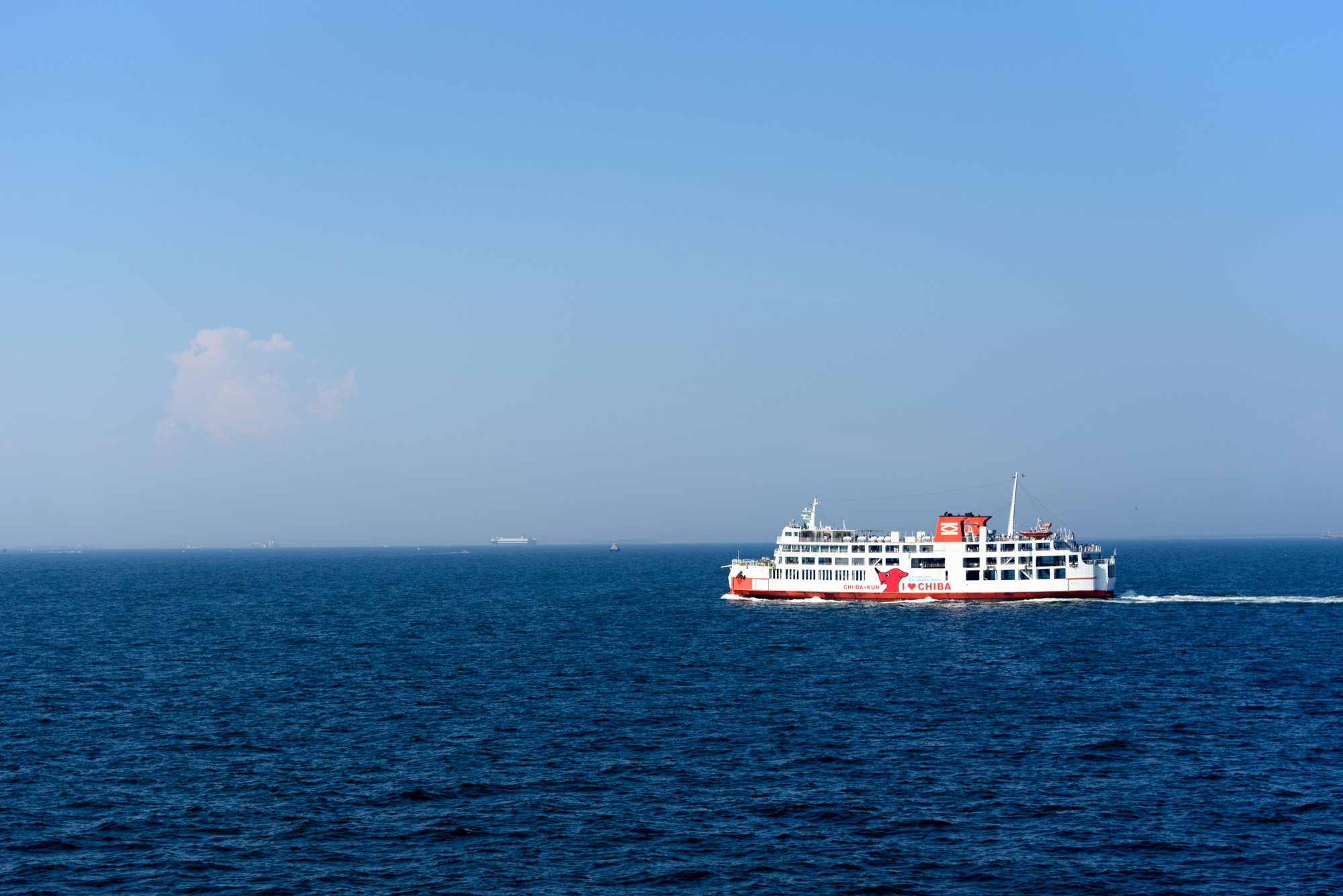
I spotted a ferry painted with Chiba-kun (Chiba’s mascot) passing by.
Seagulls


Seagulls followed the ferry, flying alongside us the entire way. In the photo on the right, you can see one of them has what looks like a fishing line caught around it—a somewhat sad sight.
Kanaya Port


The restaurant at Kanaya Port was already closed by 3 PM. There’s a monument marking it as a “Lovers’ Sanctuary,” but the plaque had been removed.

This photo from June 2015 shows the plaque still intact. Perhaps it was removed due to rust or age, as Kanaya is still listed as a “Lovers’ Sanctuary” on the official website.
Hama-Kanaya Station


As I headed toward Hama-Kanaya Station, an E257 Limited Express train passed by—an unusual sight on the Uchibo Line.


JR East’s “Otona no Kyujitsu Club” pamphlet for those aged 50 and older featured artwork by Seizo Watase. It felt like a nostalgic, targeted marketing approach for this generation.
In Conclusion
The ferry from Kurihama to Kanaya takes about 40 minutes. It’s surprisingly close between Kanagawa and Chiba, and with the Tokyo Bay Aqua-Line, cars and buses have become more convenient, but a ferry trip is a nice change of pace. Ferries often feel relaxing, but because the travel time is relatively short, I recommend a round-trip if you want to fully enjoy the experience.